
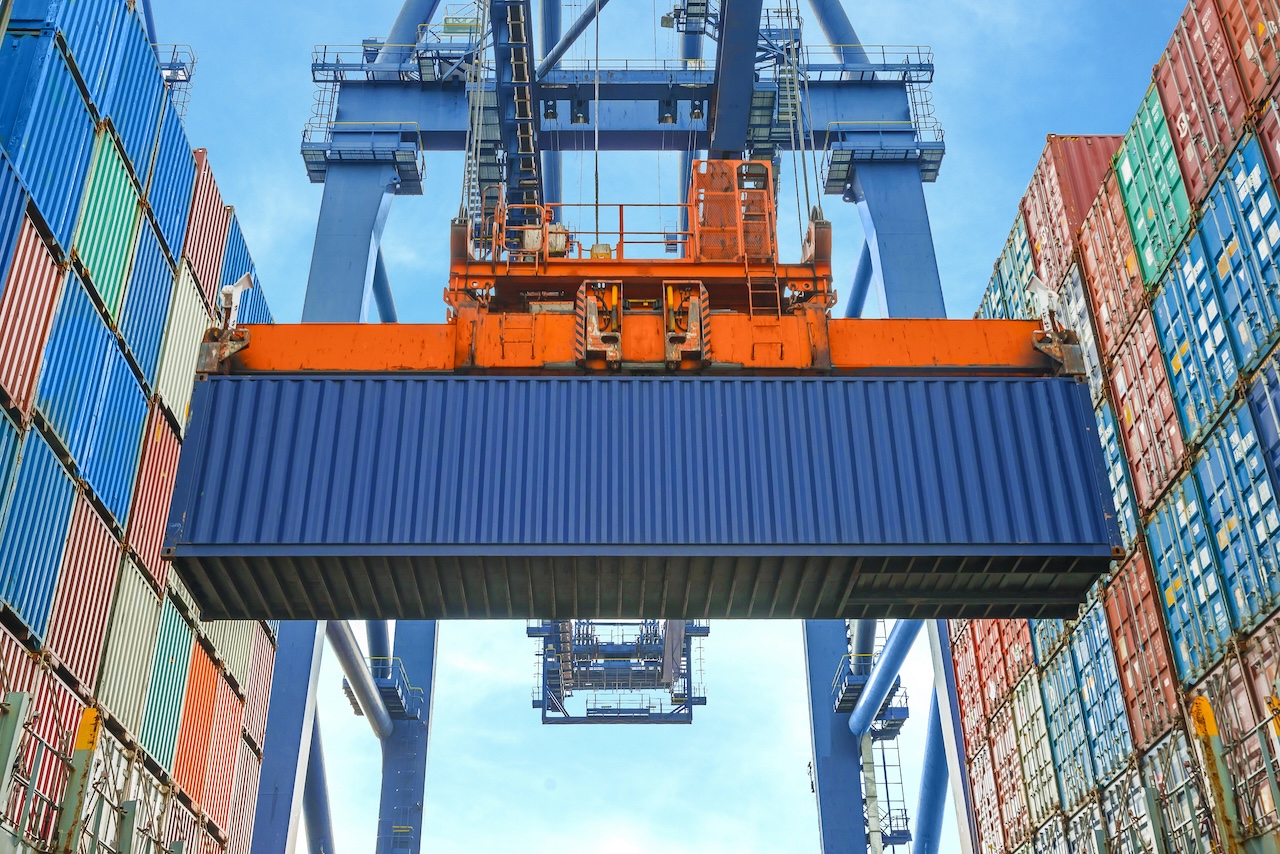
A container terminal can now move boxes with driverless vehicles, remotely controlled cranes and software that schedules work across the yard. The technology is no longer confined to experimental projects. Yet the business case for automation remains more complicated than the industry’s familiar images of robotic equipment suggest.
In 2026, the most important question is not whether a port can automate another task. It is whether technology can shorten a ship’s total time in port, make cargo movements more predictable and improve the economics of the wider logistics network. A faster crane is of limited value if containers remain trapped in the yard or trucks face long queues at the gate.
The distinction matters as terminal operators commit capital to major expansion projects and governments push maritime trade towards digital processes. Automation offers genuine opportunities, but the results depend on terminal design, operating conditions, workforce arrangements and the systems connecting ports with shipping lines, hauliers and authorities.
Automation Is Not a Single Technology
The term automated port describes several quite different systems. Some terminals automate documentation and gate access while leaving cranes and vehicles under direct human control. Others automate large parts of container handling, with staff supervising operations remotely.
In a modern container terminal, the technology may include:
- Terminal operating systems (TOS) that coordinate vessel plans, yard positions, equipment and cargo movements.
- Automated stacking cranes that move containers within designated yard blocks.
- Automated guided vehicles and terminal tractors that transport containers between the quay, yard and rail facilities.
- Remote crane operation that places operators in control rooms rather than crane cabins.
- Digital gate and appointment systems that reduce paperwork and coordinate truck arrivals.
- Predictive maintenance and decision-support tools that use equipment and operating data to flag developing problems.
These systems are not interchangeable. Automating yard movements may improve consistency within a controlled area, while an appointment system may achieve a greater immediate benefit at a terminal whose principal problem is road congestion. The relevant measure is therefore the result of the investment, not the sophistication of the equipment.
What the Performance Data Actually Measure
The World Bank and S&P Global Market Intelligence's Container Port Performance Index 2025 provides a useful starting point. Its central measure is how long vessels spend in port, including waiting and time alongside, rather than how many automated machines a terminal owns.
That distinction prevents a common analytical mistake: treating a port’s position in an efficiency ranking as proof that automation has succeeded or failed. The index is calculated at port level, whereas a single port may contain several terminals with different technologies and performance. Weather, shipping schedules, congestion and disruptions outside the operator’s control can affect the result.
A separate World Bank Container Terminal Performance Improvement Guide, published in October 2026, takes a similarly operational approach. It examines the contribution of berth processes, yard management, equipment use and other activities to total turnaround time. The implication is straightforward: a terminal can spend heavily on crane automation without fixing the process that actually constrains its capacity.
The business case for port automation should begin with a measurable bottleneck—not a technology demonstration.
That may sound obvious. In practice, however, terminal projects often involve long investment cycles, multiple stakeholders and forecasts extending far beyond current shipping conditions. A piece of equipment that performs well in isolation must still fit into a working system exposed to fluctuating vessel arrivals and uneven landside demand.
Rotterdam: Automation as Part of a Larger Expansion
Rotterdam’s Maasvlakte II illustrates both the maturity of automated terminals and the continuing investment needed to expand them.
APM Terminals has operated its highly automated Maasvlakte II facility since 2015. Its model combines automated cargo-handling areas, remote supervision and electronic exchange of information with the wider port community. The latest development is not simply the addition of more robots; it is a coordinated expansion of berth, yard and rail capacity.
In August 2026, APM Terminals announced an agreement under which Hapag-Lloyd would acquire a 25% stake in Maasvlakte II, subject to regulatory approval. The terminal expansion envisages an additional 1,000 metres of deep-sea quay, bringing the total to 2,000 metres, along with extra yard space, four additional rail tracks and more automated equipment. The operator says the enlarged facility is expected to approach 5.4 million TEU of annual handling capacity. That figure is a future capacity target, not a measured current throughput result.
The project is also testing electric automated terminal tractors in mixed operating environments. Introducing such vehicles in an existing, functioning terminal raises different issues from designing a segregated automated site from the outset: traffic rules, interactions with conventional equipment, maintenance and reliable recovery when something goes wrong.
Rotterdam demonstrates why automation is best understood as infrastructure investment combined with operating-system redesign. The commercial value depends on whether the new equipment, quay capacity and inland connections function together. See the operator's August 2026 project announcement.
Singapore: Building Automation into the Port's Design
Singapore’s Tuas Port offers a different model: large-scale automation planned into a new port complex as capacity is gradually brought into service.
Tuas uses automated yard equipment and driverless vehicles, with operations coordinated through control systems rather than relying solely on conventional vehicle movements. In August 2026, operator PSA reported that the port had handled a cumulative 25 million TEU since operations began in 2022. It also reported 14 operational berths and a plan to reach 18 by 2027.
Those figures establish the scale of the project but do not, on their own, establish that automation caused an improvement in productivity or financial performance. A fair assessment would need comparable measures of operating costs, vessel service reliability, yard performance and capacity utilisation over time.
Singapore is also investigating the next frontier: more autonomous movement between port facilities and greater use of data-driven coordination. Its development illustrates a wider trend in which the terminal, the vehicles and the supporting digital systems are designed as a connected operation rather than procured as unrelated technologies. The PSA Singapore update provides the reported operational milestones.
Why Automation Does Not Guarantee Higher Productivity
The benefits often associated with automation—more consistent operation, fewer manual handoffs and better use of space—are plausible and, in some circumstances, substantial. Yet performance is not uniform.
A 2024 review by the U.S. Government Accountability Office found that all ten of the largest U.S. container ports used some form of process automation, but only four used automated cargo-handling equipment at the time of its research. Interviewed stakeholders described both advantages and trade-offs. Some reported improved safety and denser stacking; others described automated equipment that moved more slowly than conventional alternatives.
This mixed evidence has several possible explanations. Automated yards must be designed around predictable movements and safe separation of equipment. Systems can lose time when exceptions require manual intervention, or when one automated stage waits for another. Even a highly efficient quay can be constrained by customs processes, inland rail slots, truck arrivals or unavailable containers.
The question for an operator is therefore not simply How many moves can this crane make per hour? It is What happens to the complete container journey when this process changes?
The Workforce Is Part of the System
Port automation is also a labor question, not just a software or equipment decision.
Moving an operator from a crane cabin to a remote control room may reduce exposure to some physical hazards. Automated equipment can create demand for technicians, control-system specialists, cybersecurity staff and maintenance engineers. At the same time, some conventional driving and handling tasks may decline, and not every displaced role has an immediate equivalent.
Whether a project succeeds can depend on how employers and workers negotiate these changes. Existing labor agreements, retraining costs, new shift arrangements and confidence in safety procedures all affect the pace of deployment. Research at Rotterdam School of Management specifically examines how unions, work councils and terminal operators negotiate automation and potential job displacement.
A credible investment assessment should include workforce planning from the beginning, with clear arrangements for training, supervision and responsibility when automated processes fail. Treating labor as a late-stage implementation obstacle is likely to increase rather than reduce operational risk.
Digital Coordination May Matter More Than Another Robot
Many delays originate beyond the boundaries of a terminal. Shipping lines adjust arrival times, customs agencies require declarations, hauliers need collection slots and inland carriers depend on reliable container availability. If those parties work from inconsistent information, automation inside the port solves only part of the problem.
The International Maritime Organization has required member states to use Maritime Single Windows for electronic ship-clearance information since January 2024. At its March 2026 Facilitation Committee meeting, the IMO approved a maritime digitalization strategy emphasizing interoperability, standardization and data governance. The strategy remains subject to further review before anticipated submission for adoption at the IMO Assembly in 2027.
These developments do not require every port to install autonomous cranes. They underscore something more fundamental: a port's digital infrastructure must exchange useful information with parties outside the terminal. Better advance notice, consistent cargo identifiers and timely updates may prevent delays that physical automation cannot remove.
Resilience Has a Cybersecurity Dimension
Greater connectivity also creates a larger technological dependency. A terminal whose gates, vehicles, yard planning and berth operations depend on interconnected software needs a credible plan for outages, corrupted data and cyber incidents.
The relevant questions are practical. Can operators move essential cargo if a digital interface fails? Are operational technology networks separated and monitored appropriately? Can a failed subsystem be isolated without stopping the entire terminal? Are responsibilities clear when port authorities, terminal operators and technology vendors share data?
In March 2026, the IMO's Facilitation Committee approved draft cybersecurity amendments for Maritime Single Windows. These are not yet in force: they are scheduled to go forward for adoption consideration in 2027, with an expected entry-into-force date of January 2029. The proposals reflect growing recognition that digital trade infrastructure must be engineered for resilience as well as efficiency.
Can Automation Reduce Emissions?
Automation can support environmental performance by improving traffic flow, reducing unnecessary equipment movements and helping vessels spend less time waiting. But it is not synonymous with decarbonization.
An electrically powered automated vehicle may eliminate diesel exhaust at the terminal, while its lifecycle emissions depend on electricity supply, manufacturing and use. A more efficient yard can also coexist with longer queues outside the gate. Evaluating the environmental effect requires a defined system boundary and credible before-and-after measurements.
For ports considering major investments, the stronger approach is to assess automation alongside electrification, grid capacity, equipment replacement cycles and coordination with ships, railways and road carriers.
How Terminal Operators Should Evaluate an Automation Project
The starting point should be a diagnosis of the current operation. A decision about automated equipment should be compared with less expensive alternatives such as new scheduling rules, better maintenance, redesigned traffic flows or improved coordination with inland carriers.
A useful evaluation framework would ask:
- Where is the constraint? Measure time lost at anchorage, berth, yard, gate and inland transfer points rather than focusing only on crane rates.
- What improvement is realistic? Establish a baseline using comparable vessel calls, cargo volumes and operating conditions.
- What must change around the equipment? Include software integration, safety zones, data standards, staffing and maintenance in the project scope.
- How resilient is the system? Test exceptional cargo movements, equipment faults, peak arrivals and cyber or network outages.
- What is the total cost? Consider construction, software licenses, energy infrastructure, integration, retraining, maintenance and downtime during commissioning.
- Who captures the benefit? Faster vessel turnaround may help shipping lines, while the terminal bears the capital cost; commercial arrangements should recognize the distribution of value.
- How will success be verified? Track berth productivity, vessel turnaround, yard dwell time, truck turn time, availability and cost per move over a meaningful period.
No single benchmark proves success across every port. A high-volume transshipment hub and a smaller gateway terminal may face entirely different economic conditions. Similarly, the optimal automation level at a new-build terminal may be inappropriate for an older facility with limited space and established operating patterns.
The Next Smart Port Will Be Judged on Reliability
The direction of travel is clear: ports will use more software, more sensors, remote operation and—in suitable environments—more autonomous equipment. Rotterdam and Singapore show how automation can be integrated into long-term capacity projects. U.S. evidence also shows why the benefits should not be assumed in advance.
The meaningful distinction is increasingly between projects that automate an isolated task and those that improve the movement of cargo through the entire port ecosystem. For shipping lines and cargo owners, the result that matters is not a fleet of impressive machines. It is a service that remains predictable when vessel schedules shift, equipment fails or demand arrives in waves.
Port automation's future will be determined less by how much work is performed without a human at the controls than by how reliably ships, terminals, trucks, railways and information systems operate together.
Further Reading
- World Bank — Container Terminal Performance Improvement Guide (October 2026)
- U.S. Government Accountability Office — Port Infrastructure: Automation Technologies and Varied Effects (2024)
- International Maritime Organization — Facilitation Committee, 50th Session (March 2026)
- Rotterdam School of Management — Automation and Inclusive Labour Transitions at the Port of Rotterdam